Simulation of Loss/Gain Function
Mutations may be introduced to simulate loss-of-function and gain-of-function experiments while watching the dynamics of the cell change as a result of the mutations. Loss/Gain of Function experiments may also be used as a tool to dissect pathway components.
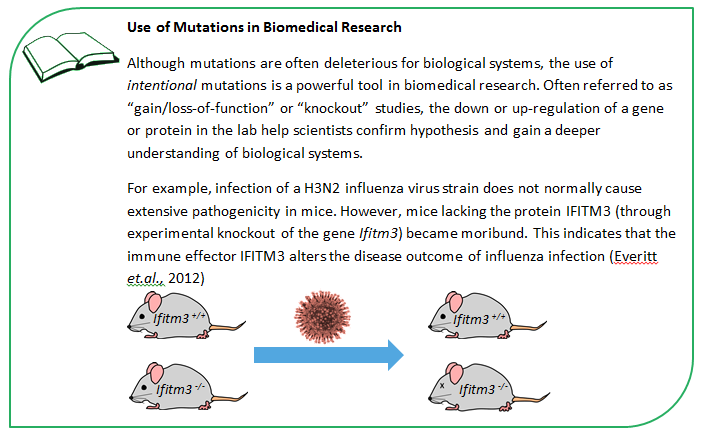
How to Introduce Mutation
Mutations can easily be specified to any component of the model to simulate gain/loss-of-function in an intuitive fashion.
- Mutations may be added before starting a simulation, or in real-time while the simulation is running. Under the Simulation page, locate the Internal Components panel
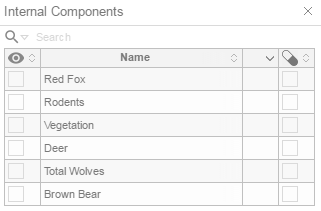
2. Under the mutations column, select the components you would like to mutation on or off. Clicking the box once is a loss-of-function mutation (indicated by a red check mark), and clicking the box twice is a gain-of-function mutation (indicated by a green checkmark). Note, clicking through the third time removes all mutations
Simulate Hunting Permit Model
Various species in an ecosystem form complex interspecific interactions and population dynamics. Let conduct a gain of function experiment on the effects of Rodents on Red Fox levels
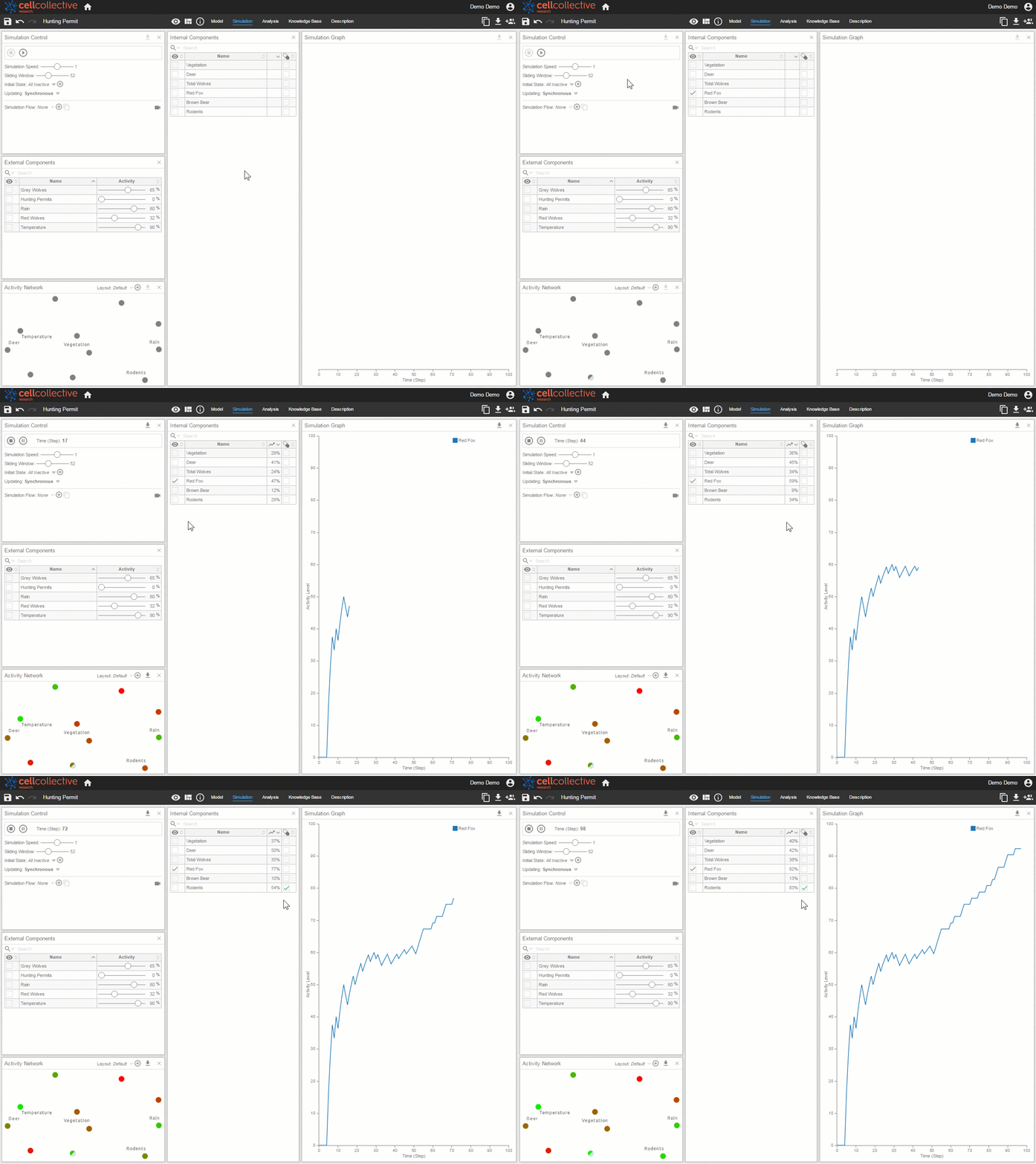
There is a population explosion! Since we know from the Knowledge Base that rodents are the primary food source for red foxes, the model behavior is logical
Using Mutations as a Pathway Dissection Tool
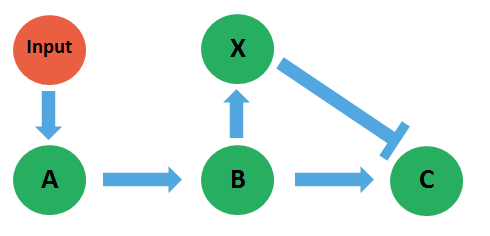
The real-time simulation feature is a great tool to troubleshoot and dissect pathways. For example, say we have an unknown model of 5 components and want to recreate the pathway. We can systematically and selectively mutate each component to establish their relative positions to each other
Let’s first mutate A off
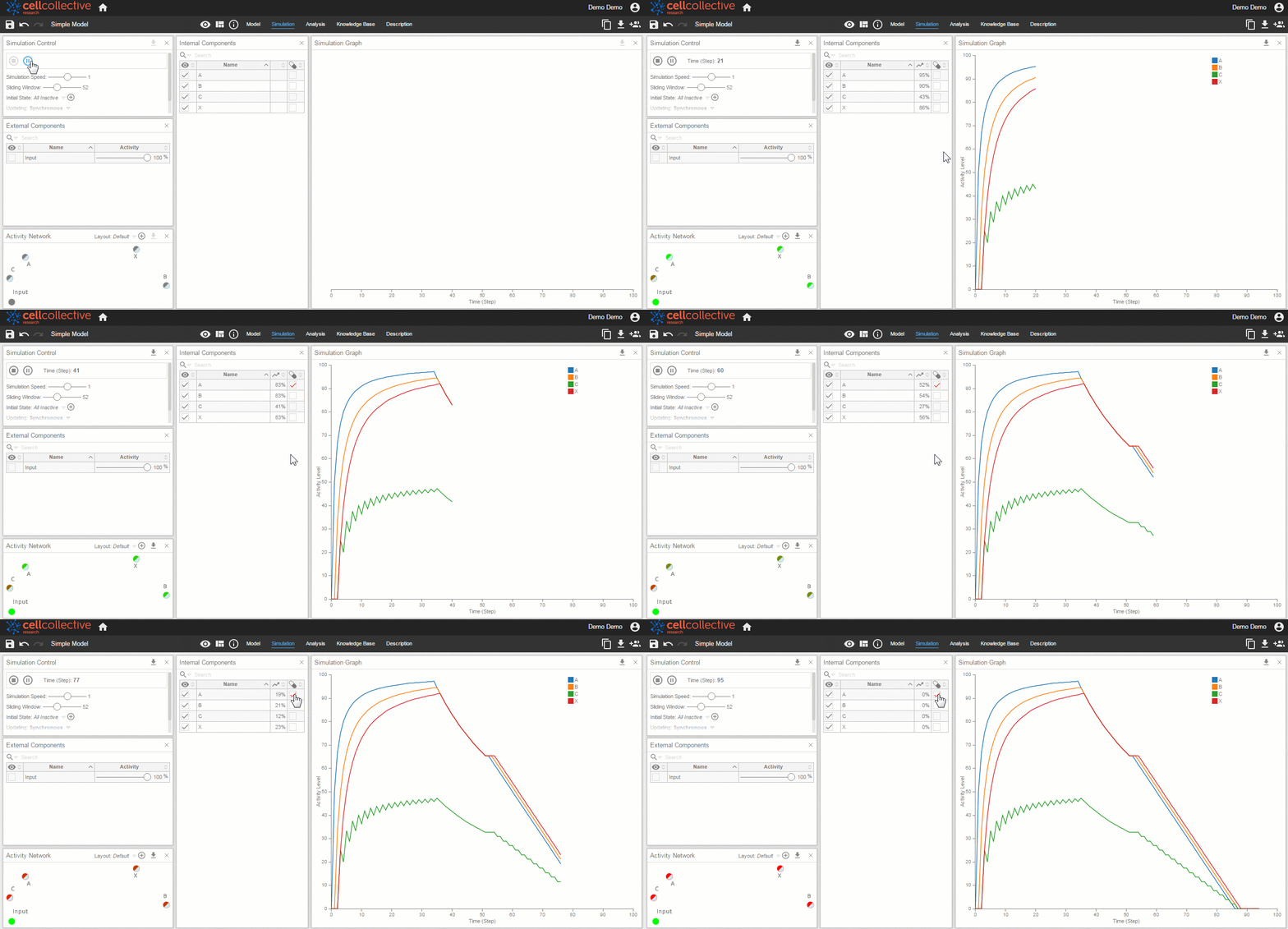
We see that all the other components decrease, therefore indicating A must be upstream of all the other components
Next, remove the mutation and allow the system to go back to equilibrium and then mutate B off
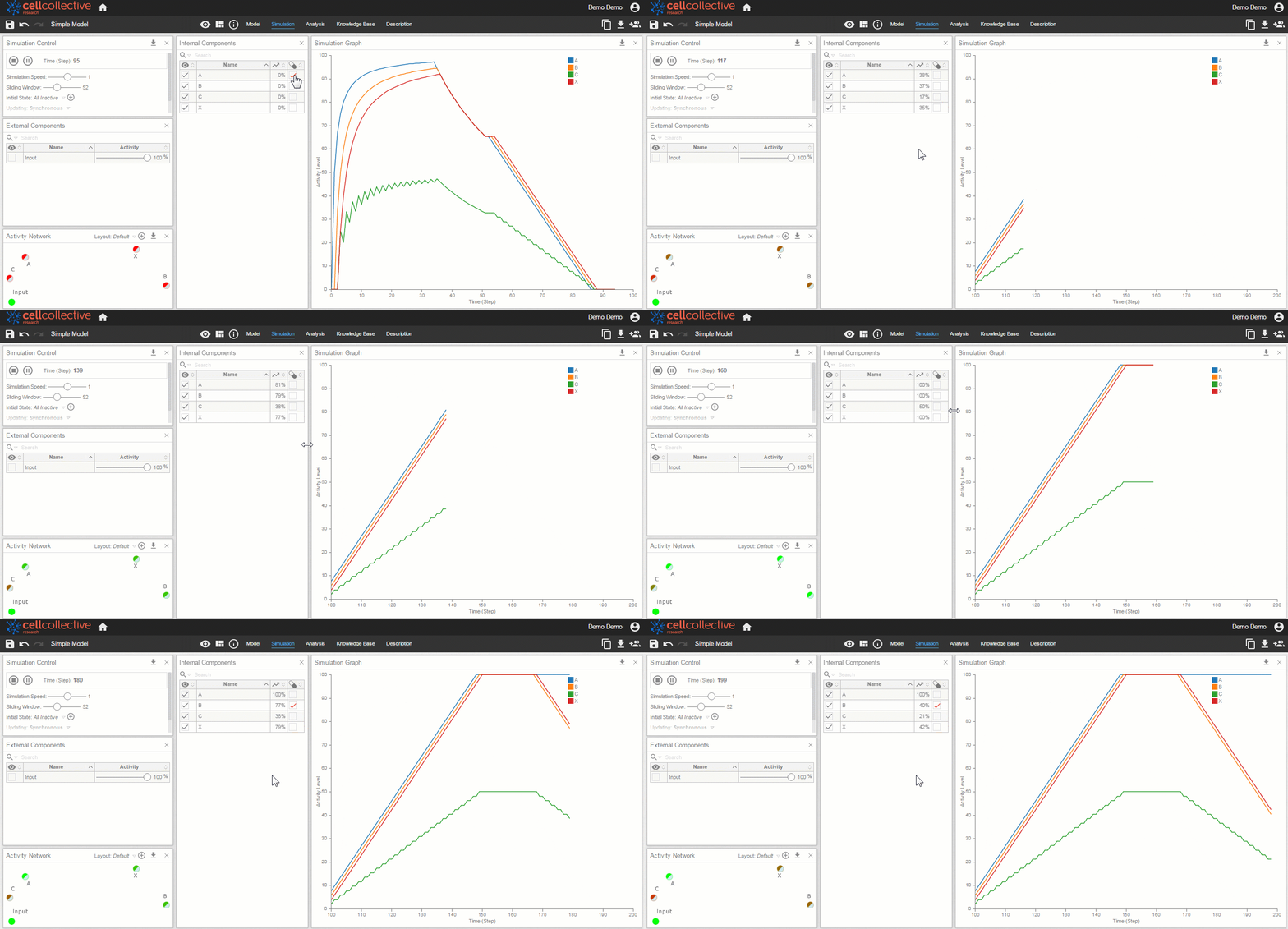
All components except A decrease, therefore B is upstream of C and X, but downstream of A. Again, remove all mutations and mutate C off
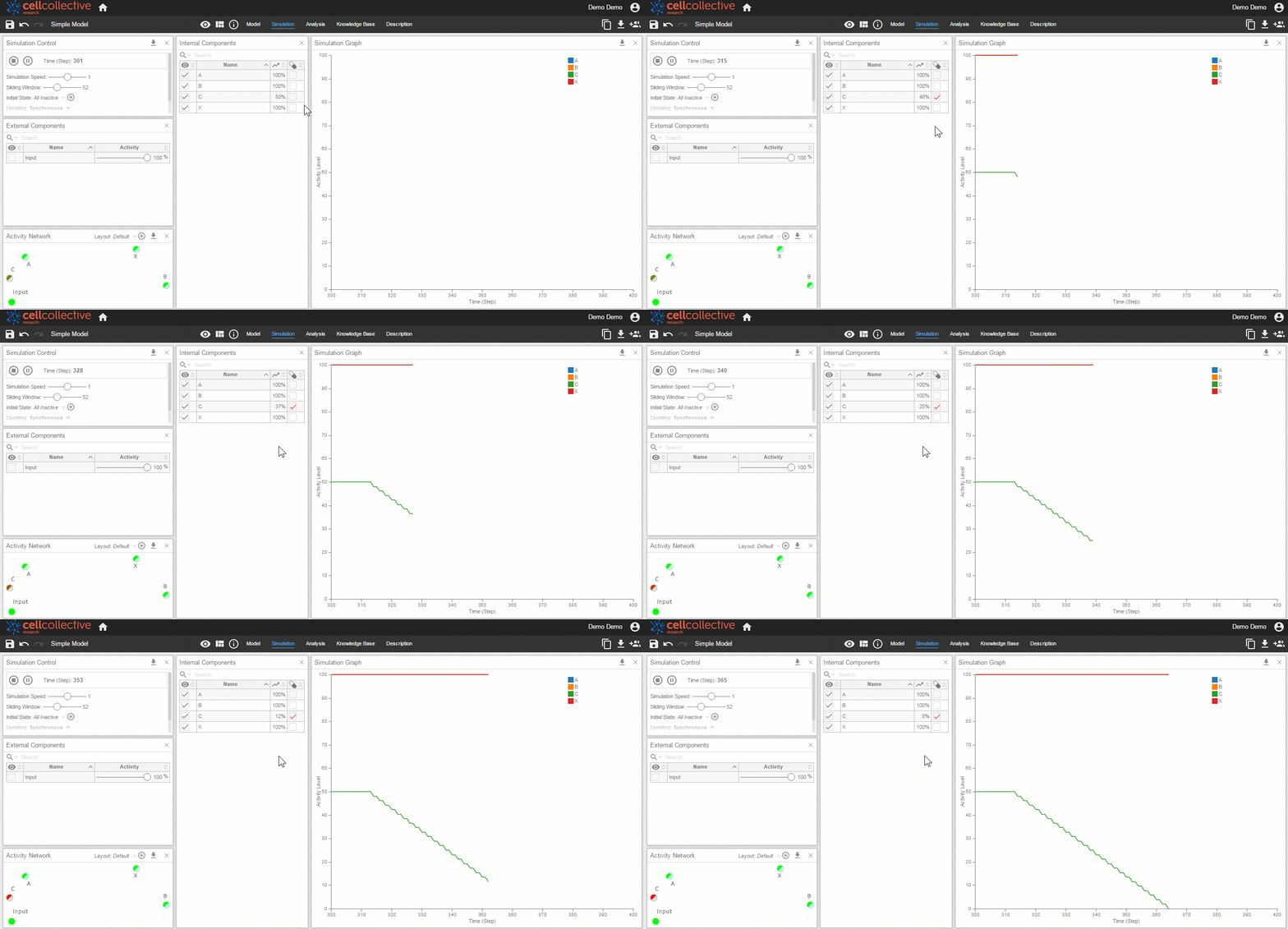
This does not affect any of the other components. C is therefore the terminal component.
What about X? From the above experiments, we know X must be connected to B. Let’s see what happens when we mutate C off
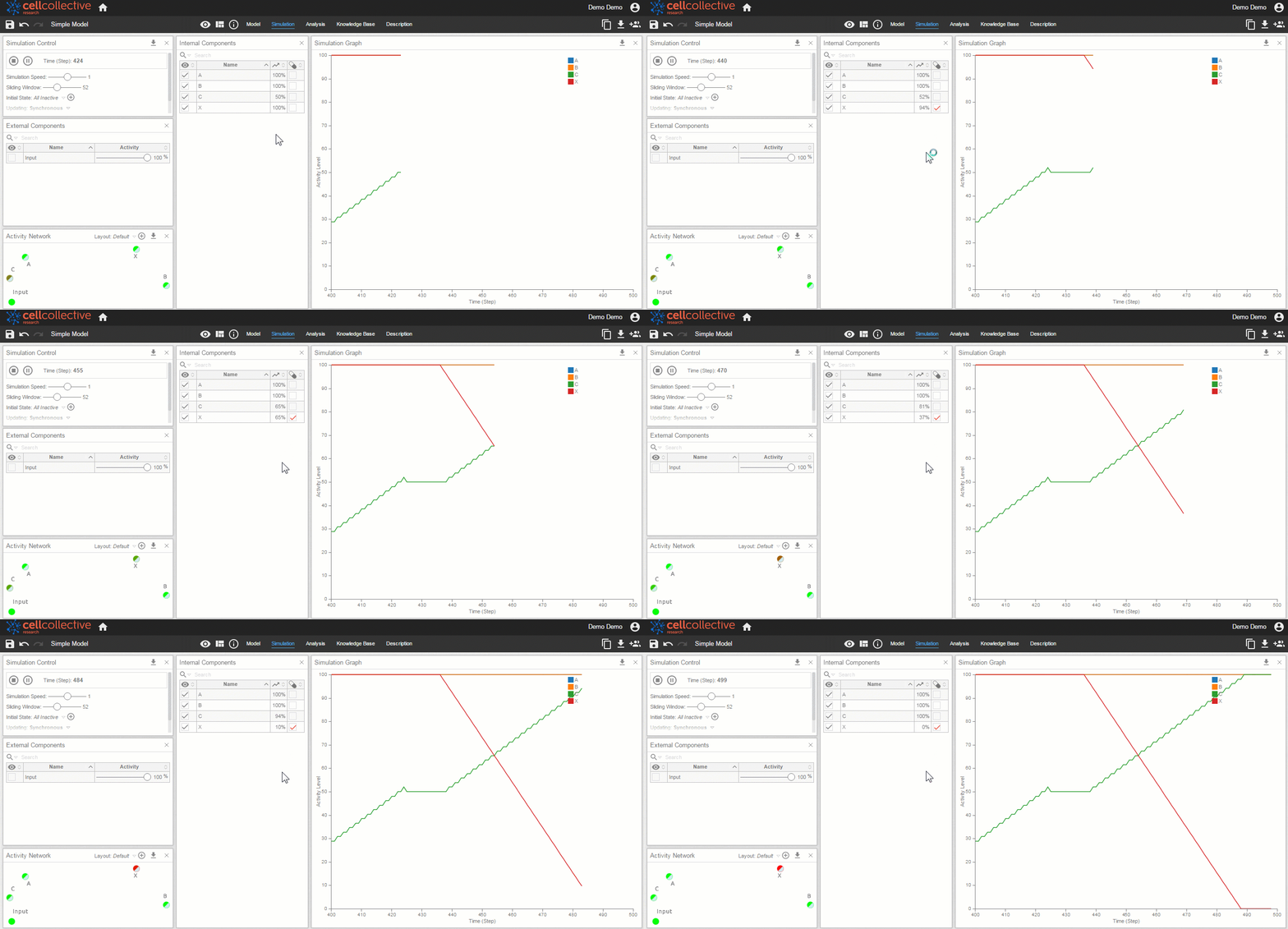
We see that when X is mutated off, C increases indicating X is a negative regulator of C
We now have enough information to recreate the pathway